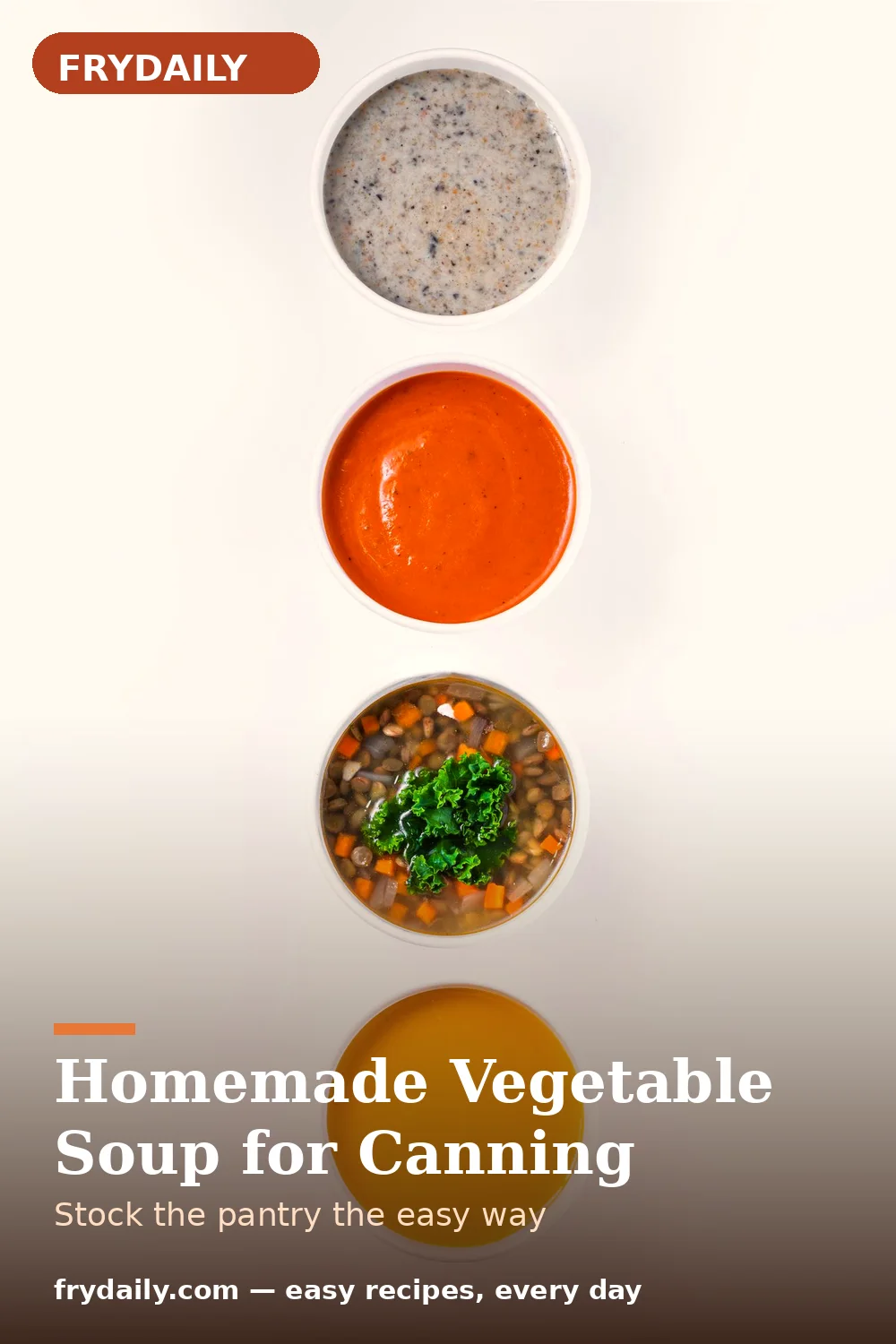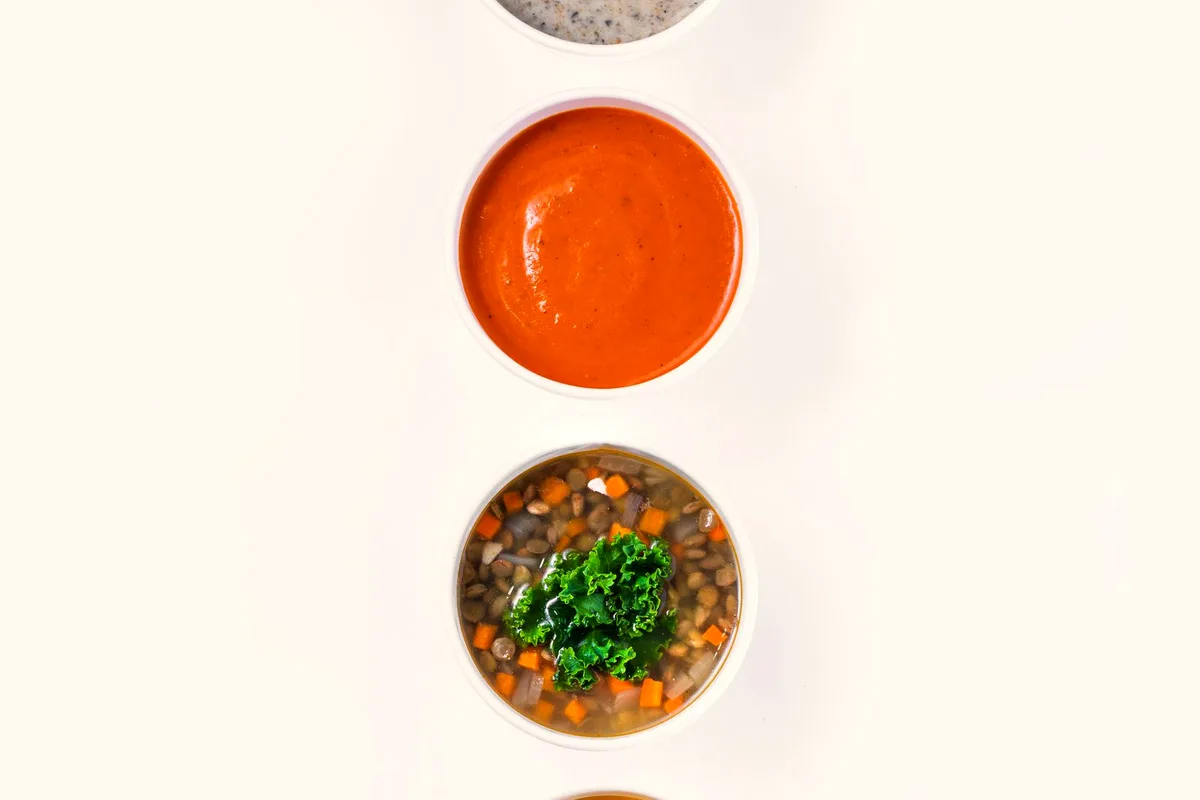
A shelf of canned homemade soup is the closest thing to a time machine a pantry can hold: twenty minutes of heating in January, and you are eating the garden you tended in September. This vegetable soup — carrots, potatoes, green beans, corn and celery in a light tomato broth — is built for the pressure canner and for real weeknight use.
Vegetable soup is a low-acid food, which means one non-negotiable rule: it must be pressure canned, never water-bath canned, following tested times and pressures for your altitude. We lay the process out carefully below, and we always recommend confirming the current figures against USDA or National Center for Home Food Preservation guidance before your first batch. Do it right once, and you have a year of lunches that taste like someone cooked for you — because someone did.
Why pressure canning is non-negotiable here
Vegetables and broth are low-acid, and low-acid foods can harbor botulism spores that boiling water cannot destroy. Only the 240°F (116°C) temperatures inside a pressure canner, held for the tested time, make shelf-stable soup safe. There is no safe shortcut — not the oven, not a dishwasher, not an inversion seal. If you do not have a pressure canner, freeze this soup instead; it freezes beautifully for six months.
Keep the vegetables in tested territory
Tested soup recipes allow some flexibility in vegetable proportions, but not in density: never add noodles, rice, flour, cream or pureed vegetables to soup destined for the canner, because dense ingredients change how heat moves through the jar. Add pasta, a swirl of cream or a handful of barley when you open and reheat the jar, where they belong.
Ingredients
- 5 cups sliced carrots (about 2 lb / 900 g)
- 5 cups cubed potatoes, 1/2-inch dice (about 2 lb / 900 g)
- 4 cups green beans, cut in 1-inch pieces (about 1 lb / 450 g)
- 3 cups corn kernels (about 450 g)
- 2 cups diced celery (about 240 g)
- 2 cups diced onion (about 300 g)
- 4 cups chopped tomatoes with their juice (about 960 g)
- 8 cups water or low-sodium vegetable broth (1.9 L)
- 4 1/2 teaspoons canning salt (27 g), or to taste
- 1 teaspoon black pepper (3 g)
- 2 teaspoons dried thyme (4 g)
Amounts are for the yield below. US customary measures first, grams in brackets for scale users.
Step-by-step instructions
- Prepare jars and canner. Wash 9 pint jars, lids and rings in hot soapy water. Prepare your pressure canner according to its manufacturer's directions, with the recommended amount of water, and keep the jars hot until filling.
- Combine and simmer. Add all the vegetables, tomatoes, water or broth, salt, pepper and thyme to a large stockpot. Bring to a boil, then simmer for 10 minutes, until the vegetables are hot through but not fully cooked — they finish in the canner.
- Fill the jars. Ladle the hot soup into hot jars, distributing solids and liquid evenly and leaving a full 1 inch (2.5 cm) of headspace. Remove air bubbles, re-check headspace, wipe rims, and apply lids and rings fingertip-tight.
- Vent and pressurize. Lock the canner lid and vent steam steadily for 10 minutes before adding the weight or closing the petcock. Bring the canner to pressure: 10 lb (weighted gauge) or 11 lb (dial gauge) at 0 to 1,000 feet — adjust for your altitude using current USDA tables.
- Process for the full tested time. Process pint jars for 60 minutes at pressure (quarts, if you use them, need 75 minutes). Keep the pressure steady the whole time; if it drops below target, restart the timing. Turn off the heat and let the canner depressurize naturally.
- Cool and check seals. Remove jars to a towel-lined counter and cool undisturbed for 12 to 24 hours. Check that every lid is sealed and concave before labeling and storing. Unsealed jars go in the fridge and get eaten within a few days.
Nutrition estimate
| Nutrient | Per serving |
|---|---|
| Calories | 120 kcal |
| Protein | 4 g |
| Carbohydrates | 26 g |
| Fat | 1 g |
| Saturated fat | 0 g |
| Sodium | 480 mg |
| Fiber | 4 g |
| Sugar | 6 g |
Nutrition figures are estimates calculated from standard ingredient data for the yield stated. Your actual values will vary with brands, substitutions and portion sizes — treat them as a guide, not a guarantee.
Storage & reheating
Sealed jars keep in a cool, dark place for 12 to 18 months. Store without the rings (so a failed seal cannot be masked), label with the date, and use the oldest jars first. Once opened, refrigerate and eat within 4 days. To serve, heat the soup to a full boil — and that is the moment to add cooked noodles, rice or a splash of cream, if you like.
Homemade Vegetable Soup for Canning
Pressure-canned vegetable soup: open a jar, heat, and lunch tastes homemade.
Ingredients
Tick ingredients off as you prep — it is the easiest way to never miss one mid-recipe.
Instructions
- Prepare jars and canner. Wash 9 pint jars, lids and rings in hot soapy water. Prepare your pressure canner according to its manufacturer's directions, with the recommended amount of water, and keep the jars hot until filling.
- Combine and simmer. Add all the vegetables, tomatoes, water or broth, salt, pepper and thyme to a large stockpot. Bring to a boil, then simmer for 10 minutes, until the vegetables are hot through but not fully cooked — they finish in the canner.
- Fill the jars. Ladle the hot soup into hot jars, distributing solids and liquid evenly and leaving a full 1 inch (2.5 cm) of headspace. Remove air bubbles, re-check headspace, wipe rims, and apply lids and rings fingertip-tight.
- Vent and pressurize. Lock the canner lid and vent steam steadily for 10 minutes before adding the weight or closing the petcock. Bring the canner to pressure: 10 lb (weighted gauge) or 11 lb (dial gauge) at 0 to 1,000 feet — adjust for your altitude using current USDA tables.
- Process for the full tested time. Process pint jars for 60 minutes at pressure (quarts, if you use them, need 75 minutes). Keep the pressure steady the whole time; if it drops below target, restart the timing. Turn off the heat and let the canner depressurize naturally.
- Cool and check seals. Remove jars to a towel-lined counter and cool undisturbed for 12 to 24 hours. Check that every lid is sealed and concave before labeling and storing. Unsealed jars go in the fridge and get eaten within a few days.
Tested in the FryDaily kitchen, October 2026. Printing? This card is designed to print cleanly on its own.